Under the Hood: How SentinelOne Actually Works

I've deployed a lot of EDRs. Most of them are just cloud-forwarders—dumb agents that collect logs, ship them to a server, and wait for instructions. SentinelOne is different.
It’s built on a philosophy that every engineer respects: "Assume the link is down." Today, I want to skip the Gartner Magic Quadrant marketing fluff and talk about the actual engineering under the hood—how the agent hooks the kernel, how the offline inference works, and why "Storyline" is more than just a buzzword.
1. The "Single Agent" Architecture: Kernel vs. User Space
In the bad old days, you installed an AV agent, an EDR agent, and a Vulnerability Management scanner. It was "Agent Bloat" hell. Performance tanked.
SentinelOne collapses this into a single binary. But the magic is where it lives. The agent installs kernel-level drivers (or eBPF probes on modern Linux) to intercept IO at the source. This isn't just scanning files on disk; it's monitoring syscalls in real-time.
The Logic Flow (Simplified)
-
01
Pre-Execution (Static AI) File hits disk. Static engine extracts headers/strings. Is it a known variant? Packed? Obfuscated? (Decision time: <10ms)
-
02
Execution (Behavioral AI) Process starts. Agent monitors behavior. Is `svchost.exe` dropping a binary in `AppData`? Is PowerShell making network calls?
-
03
Remediation (Atomic) Malicious behavior confirmed. Agent kills process tree, quarantines file, and invokes VSS trigger.
2. Offline Autonomy: The "Desert Island" Test
This is my favorite feature. Most EDRs are useless if you pull the ethernet cable. They can't check hash reputations; they can't ask the cloud "is this bad?".
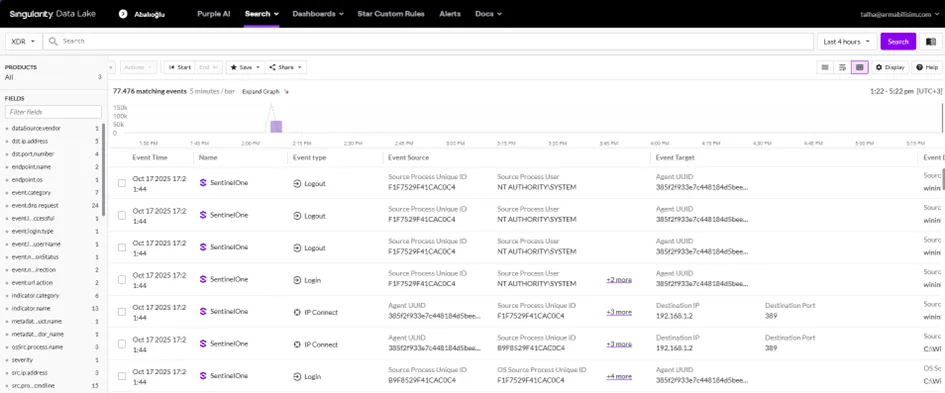
Figure 1: The autonomous local inference engine.
SentinelOne agents carry the trained model on the device. It's not shipping telemetry up to be analyzed; it's running inference locally. This means if a laptop gets infected on a plane (zero connectivity), the agent still kills the ransomware. It doesn't need to "phone home" to know it's being attacked.
3. Storyline™: Solving the "Alert Fatigue" Crisis
If you've worked in a SOC, you know the pain. You get an alert: Process A started B.
Then
another: Process B started C. Then Process C deleted D. You spend 4 hours
in
Excel trying to stitch it together.
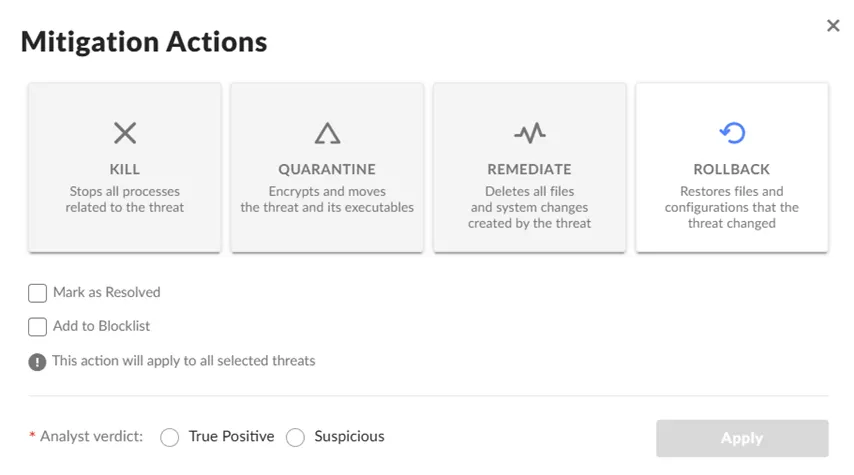
Figure 2: Storyline visualizing the attack chain instantly.
SentinelOne automates the correlation ID. Every process spawns with a unique Storyline ID. The agent tracks this ID across forks, injections, and network calls.
Use Case: The PowerShell Script
Imagine a user runs a malicious macro.
1. Word spawns cmd.exe
2. cmd.exe spawns powershell.exe
3. PowerShell reaches out to `evil-site.com`
In Splunk, these look like 3 different events. In SentinelOne, they share one Storyline ID. One click shows the entire tree. This turns a 2-hour investigation into a 2-minute confirmation.
4. The "Undo" Button: Ransomware Rollback
Honestly, this feels like magic the first time you see it. When the agent detects ransomware encryption activity, it doesn't just kill the process. It leverages Windows VSS (Volume Shadow Copy Service).
Because the agent was tracking the process, it knows exactly which files were touched. "Rollback" isn't a full system restore; it's a surgical reversion of only the files modified by the malicious Storyline ID. You don't lose the user's legit work—you just lose the encryption.
5. Beyond Endpoint: The XDR Scope
Endpoint is just the entry point. A modern attack moves laterally to the cloud and exploits identity. SentinelOne unifies this data into the Singularity Data Lake.
Cloud Security (CNAPP)
This isn't just checking AWS Config rules. SentinelOne uses eBPF (Extended Berkeley Packet Filter) on Linux workloads.
- Runtime Protection (CWPP): eBPF allows the agent to monitor kernel-level system calls without loading heavy kernel modules that risk stability (kernel panics). It's safer, faster, and immutable.
- Agentless Scanning (CSPM): With the PingSafe acquisition, S1 scans your cloud posture API-side, finding misconfigurations before an agent is even deployed.
Identity Security (ITDR)
Attackers love Active Directory. They hunt for privileged accounts to move laterally. SentinelOne's ITDR module places Deception lures—fake credentials and honey-tokens—on endpoints.
When an attacker dumps `lsass.exe` and tries to use a fake admin credential, the trap triggers. It's high-fidelity. No user accidentally tries to log in with a hidden honeypot account.
6. Validating the Tech: MITRE ATT&CK
Marketing claims are cheap. MITRE evaluations are the truth serum. In the 2024 evaluations, SentinelOne achieved 100% Protection and 100% Detection.

Figure 3: Consistently leading in EDR efficacy.
But the most important metric? Signal-to-Noise Ratio. SentinelOne produced ~88% fewer alerts than competitors because of Storyline correlation. Instead of 100 "file modification" alerts, you get 1 "Ransomware Attack" story.
7. The Autonomous SOC: Purple AI
The future isn't learning complex query languages like SPL or KQL. It's natural language. Purple AI sits on top of the Data Lake.
This democratizes threat hunting. A Tier-1 analyst can now perform Tier-3 investigations.
Engineer's Verdict
SentinelOne wins because it respects the endpoint's reality. It knows networks fail. It knows users click things they shouldn't. It doesn't rely on a perfect world—it builds a resilient one right on the metal. If you're building a modern stack, this is the foundation you want.