Popular Endpoint Security Solutions

In this article, we will take a look at endpoint security solutions that are popularly used around the world. We will discuss these solutions with their features, pros and cons.
In the digitalizing world, information security is no longer just about protecting corporate boundaries. It is also necessary to detect, evaluate and respond to threats beyond these borders. In this context, Endpoint Detection and Response (EDR) and eXtended Detection and Response (XDR) systems stand out as one of the most advanced systems in defending against and responding to cyber security threats.
Differences Between EPP, EDR, and XDR
When comparing security solutions, it is critical to focus not only on what data (telemetry) they collect but also on how they are managed and their Total Cost of Ownership (TCO). Modern endpoint security layers are distinguished as follows:
| Feature | EPP (Endpoint Protection Platform) | EDR (Endpoint Detection & Response) | XDR (Extended Detection & Response) |
|---|---|---|---|
| Management Style | Passive / Rule-Based ("Set and Forget"). Policies are pushed from the center. | Active / Analytical. Requires continuous data tracking and proactive threat hunting. | Hybrid / Automated. Centralized management orchestration of multiple security layers. |
| Alert Type | Binary (0/1). The threat is either there or not. Usually reports a "Cleaned" status. | Conceptual / Contextual. Shows why a behavior is suspicious with supporting evidence. | Holistic (Storyline). Presents the entire attack chain (Kill Chain) as a single narrative. |
| Alert Management | Low volume of alerts, but high risk of False Negatives (missing threats). | Reports even minor anomalies. Can lead to "Alert Fatigue" for analysts. | Correlates logs from different sources, reducing noise and alerts by 50-70%. |
| Response | File quarantine, USB blocking, system scanning. | Device isolation, process termination, RAM dump collection, remote command execution. | EDR actions plus network IP blocking, cloud session termination, email box cleaning. |
| Resource Needed | Can be easily managed by an IT or System Administrator. | Requires dedicated SOC analysts or security specialists. | Requires high-level security architects or Managed Detection & Response (MDR) services. |
CrowdStrike Falcon
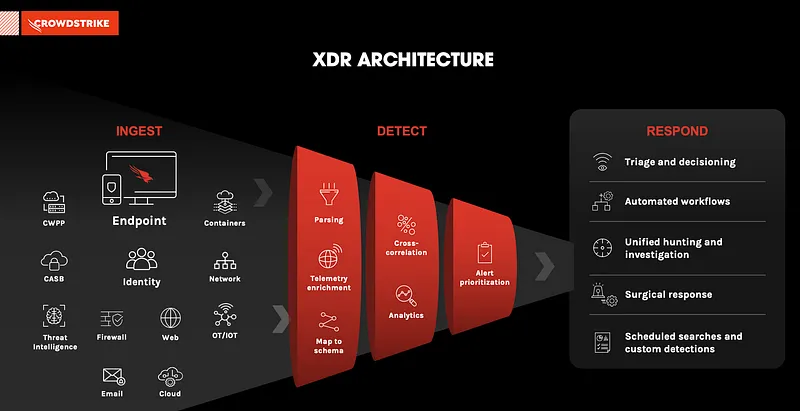
CrowdStrike Falcon is a cloud-based endpoint detection and response (EDR) platform. It also offers XDR features. Thanks to its completely cloud-focused structure, it offers fast deployment and scalability advantages. It provides comprehensive protection by running through a single thin client software (agent), minimizing impact on endpoint performance. It is especially known for its proactive threat hunting capabilities and comprehensive threat intelligence network. With its "Falcon Discover" module, it provides application inventory, account hygiene, and license management, while its "Falcon for IT" module utilizes an osquery-based backend to run SQL-like queries to retrieve real-time IT operations telemetry from endpoints.
- Pros: Extremely lightweight agent architecture, AI-powered Charlotte AI natural language helper, rich threat intelligence, and industry leadership.
- Cons: High Total Cost of Ownership (TCO) due to its highly modular licensing structure; does not offer native physical patch distribution despite showing vulnerability status.
https://www.crowdstrike.com/cybersecurity-101/what-is-xdr/
Cybereason
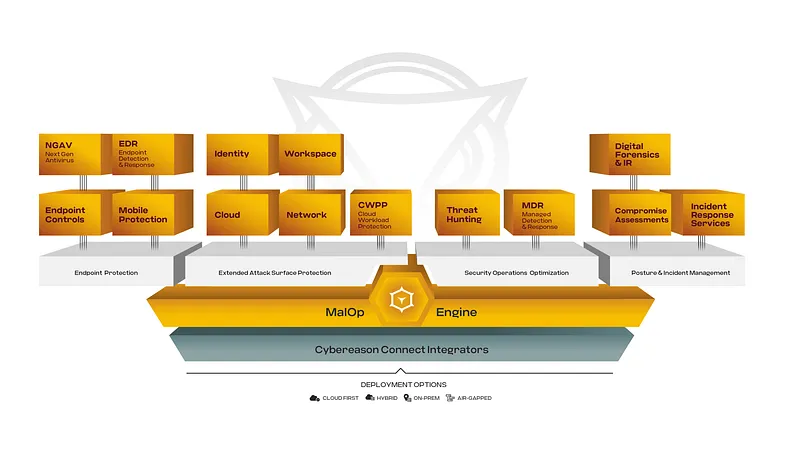
Cybereason is a major player in the cybersecurity industry and is particularly known for its endpoint detection and response (EDR) capabilities. Cybereason is one of the rare solutions that can offer EDR and EPP capabilities on-premises. XDR capabilities, however, are only available on the cloud platform.
The central component of the platform is "Malop" (short for Malicious Operation), which is designed to automatically detect threats, visualize, and analyze all components and impacts of a malicious operation or attack. This allows security professionals to evaluate incidents in a broader context and see the full story of malicious activity.
- Pros: Excellent "Malop" interface presenting the entire attack story in a single timeline, flexible on-premises deployment support.
- Cons: Advanced XDR features are cloud-dependent, and the integration ecosystem is narrower compared to top competitors.
https://www.cybereason.com/platform
Microsoft Defender for Endpoint
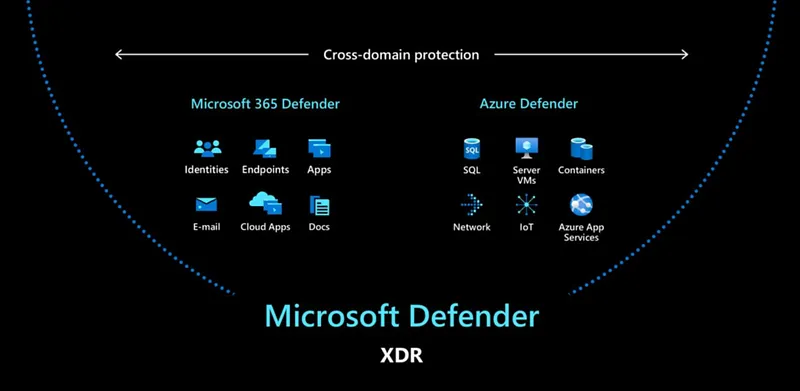
Formerly known as Microsoft Defender Advanced Threat Protection (ATP), this solution is a comprehensive EDR and XDR platform that is fully integrated and built into the Windows operating system. Microsoft has expanded Defender by integrating it with other M365 security products under the Microsoft 365 Defender brand.
It uses advanced algorithms and AI-based analytics to detect complex cyberattacks, identify their origins, and respond quickly to incidents. The fact that it does not require an additional agent installation on Windows systems significantly reduces the operational overhead in corporate environments.
- Pros: Native to Windows OS (no agent deployment required), seamless integration with the Microsoft 365 ecosystem.
- Cons: Complex management on non-Windows platforms (Linux/macOS), and advanced security features require expensive licensing tiers (E5/G5).
Palo Alto Cortex XDR
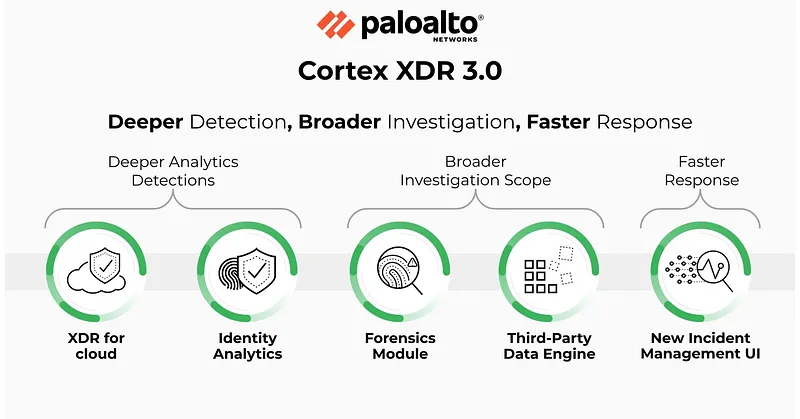
Palo Alto Cortex XDR is an extended detection and response (XDR) solution that correlates network, endpoint, and cloud logs to identify and mitigate cyber threats. Rather than focusing solely on endpoint telemetry, it merges data from Palo Alto next-generation firewalls (NGFW) and cloud services.
With its "Pathfinder" technology, Cortex XDR can analyze the network behaviors of unmanaged devices (like IoT and medical devices). It also includes robust SOAR features for automated threat hunting and incident response.
- Pros: SOTA telemetry correlation between network and endpoint data, automatic network-level isolation using NGFW integrations.
- Cons: Heavy dependency on the Palo Alto network hardware ecosystem for maximum value, premium licensing and storage costs.
https://www.xcitium.com/palo-alto-cortex-xdr/
SentinelOne
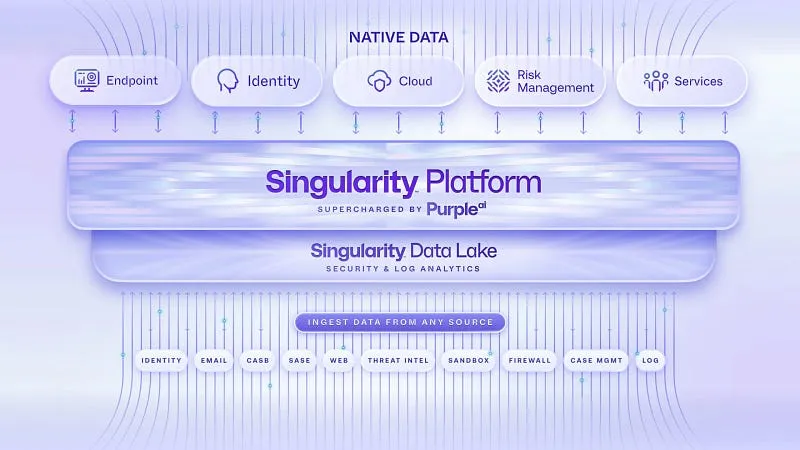
SentinelOne Singularity stands out in the cybersecurity landscape with its AI-driven, autonomous architecture. Its local behavioral engine runs on the agent itself, allowing it to detect and block threats even when endpoints are completely disconnected from the network.
The platform's "Storyline" technology tracks the entire lifecycle of processes with a unique identifier. The "Singularity Ranger" module transforms every active agent into an intelligent network scanner, mapping unmanaged devices in subnets with active and passive methods. Additionally, "Remote Script Orchestration (RSO)" allows admins to run PowerShell/Bash scripts at scale across the entire fleet for autonomous IT operations.
- Pros: Tamperproof rollback mechanism that works independently of Windows Shadow Copy (VSS), autonomous network discovery via Ranger, and independent agent execution without cloud connection.
- Cons: Advanced features (Ranger, RSO, vulnerability management) are sold as separate add-ons, and portal package tiers can be confusing.
https://www.sentinelone.com/platform/
VMware Carbon Black
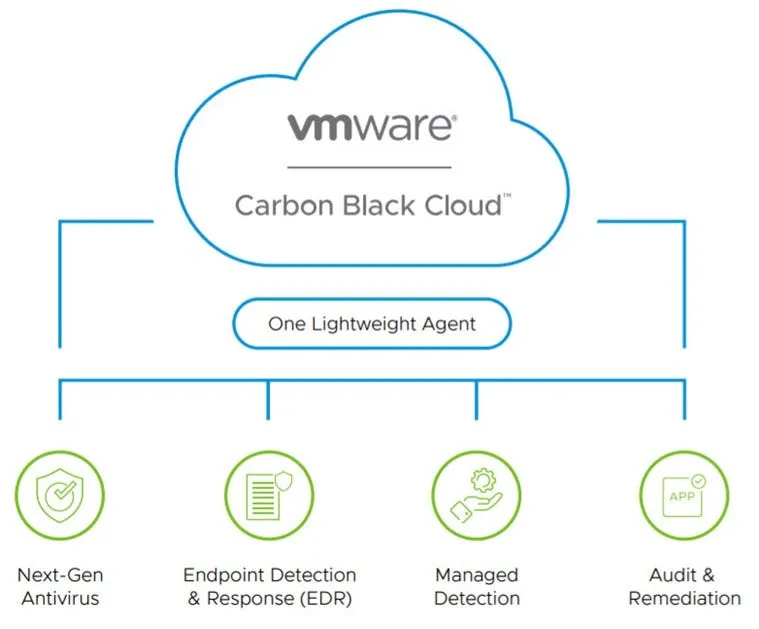
VMware Carbon Black is a comprehensive cybersecurity platform that offers both cloud-based and on-premises deployment models. It integrates deeply with virtualization infrastructures (VMware vSphere/vCenter) at the hypervisor level to secure virtual servers and workloads.
It uses behavioral analytics and machine learning to defend against advanced threats. The on-premises installation model is a critical advantage for organizations under strict regulations that demand complete data sovereignty.
- Pros: Unmatched integration with virtual infrastructure (hypervisor-level security), stable environment for on-premises data centers.
- Cons: Licensing uncertainty following the Broadcom acquisition, and relatively high resource footprint on older, legacy hardware.
https://www.vmware.com/docs/vmw-datasheet-carbon-black-hosted-edr
Wazuh
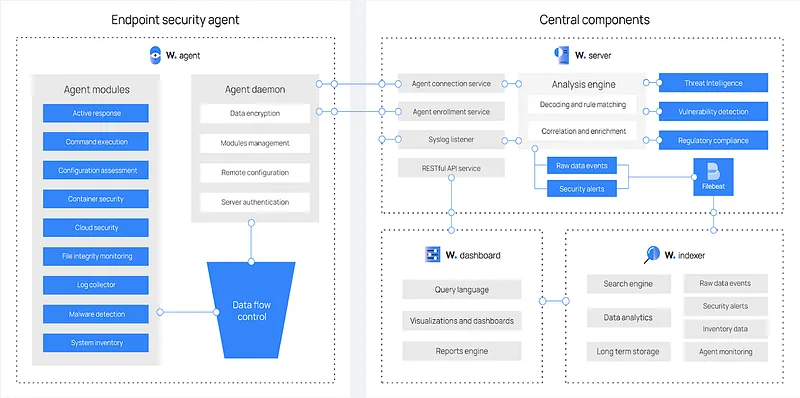
Wazuh is a popular open-source cybersecurity platform that combines endpoint protection, log management, threat hunting, vulnerability detection, and compliance audits under one roof. It provides a SIEM-like experience using file integrity monitoring (FIM) and log analysis tools.
Offering a cost-effective solution for small to medium-sized businesses, Wazuh includes pre-built compliance dashboards for regulations like PCI DSS, GDPR, and HIPAA.
- Pros: Completely open-source and free, highly customizable, and robust file monitoring and log aggregation capabilities.
- Cons: Setup and fine-tuning require high technical expertise, and professional enterprise support is less widespread than its commercial peers.
https://documentation.wazuh.com/current/getting-started/components/index.html
Elastic Security
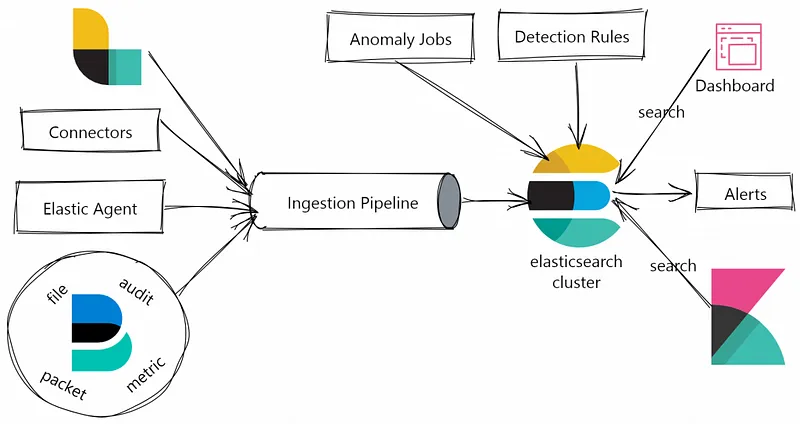
Elastic Security is a powerful SIEM and endpoint security solution built on the open-source Elastic Stack (ELK Stack) infrastructure. It is capable of performing real-time threat analysis in cloud, on-premises, and hybrid environments.
With its flexible, index-free data query model, it allows threat hunters to quickly search petabytes of logs. It identifies anomalies using machine learning and AI-powered behavioral models.
- Pros: Exceptional speed when searching and analyzing massive datasets, flexible custom dashboards.
- Cons: Rapidly growing hardware and storage costs as log volume expands, and a learning curve for Elastic search query languages (ESQL/KQL).
https://dzlab.github.io/2023/04/26/elastic-cybersecurity/
Bitdefender GravityZone
Bitdefender GravityZone is a hybrid and on-premises compatible endpoint protection platform (EPP/EDR) known for its deep virtualization expertise. Written with containerized microservices, it is typically deployed as Linux-based virtual appliances, eliminating Windows Server licensing fees.
It operates using a single modular agent called "BEST" (Bitdefender Endpoint Security Tools). Its "Ransomware Mitigation" module takes tamper-proof backups of target files the moment suspicious encryption activity is detected and automatically restores them after the attack is blocked. It also blocks remote encryption attacks coming over network shares at the IP level.
- Pros: Integrated physical patch management, low resource footprint on virtual servers (via centralized Security Server scanning), and robust network-level ransomware containment.
- Cons: Vulnerability and patch management require separate add-on licenses, and modern EDR features are not supported on legacy operating system versions.
https://www.bitdefender.com/business/support/en/77212-376327-endpoint-protection.html
Trend Micro Apex One
Trend Micro Apex One is an on-premises endpoint security solution that stands out with its "Virtual Patching" technology. It is managed via Windows IIS and SQL Server infrastructure through Apex One Server and Apex Central components.
Virtual Patching shields vulnerabilities at the network layer using the host IPS engine. Once a vulnerability (CVE) is disclosed, it blocks exploit attempts before the physical software patch is tested and deployed. This prevents system reboots, which is critical for operational technology (OT/ICS) networks and legacy servers.
- Pros: Excellent extended support for legacy OS (Windows XP/7, Server 2008), network-level shielding without requiring system reboots.
- Cons: On-premises management server requires Windows Server and MSSQL, and the HIPS engine can degrade network performance on low-spec systems.
Kaspersky Endpoint Security for Business
Kaspersky Endpoint Security (KES) is an on-premises security suite that stands out for its comprehensive system administration capabilities. Via Kaspersky Security Center (KSC), it supports hierarchical master/slave server structures, allowing smooth management of geographically dispersed enterprises.
Its "System Watcher" and "Remediation Engine" work independently of Windows Shadow Copy (VSS) to rollback registry changes and recover encrypted files from local protected backups. The "Systems Management" module can act as a WSUS alternative, handling OS image deployment and third-party application patching from a single console.
- Pros: Powerful local rollback capabilities (VSS independent), rich IT operations and patch management suite, and a specialized "Embedded Systems Security" agent for legacy terminals.
- Cons: Subject to geopolitical restrictions in certain Western jurisdictions, and the network management agent must be updated separately from the security application.
https://support.kaspersky.com/KESB/14.2/en-US/181954.htm
ESET PROTECT
ESET PROTECT On-Prem is an endpoint security platform that integrates modern XDR capabilities while preserving its signature lightweight resource footprint. The ESET PROTECT Server runs on both Windows and Linux, and is also distributed as a pre-configured virtual appliance.
It handles ransomware via its "Ransomware Remediation" module, restoring files from secure cache. By integrating with Intel TDT (Threat Detection Technology), it monitors CPU performance telemetry (PMU) for encryption behaviors, detecting in-memory and heavily obfuscated threats at the hardware level without impacting performance.
- Pros: Minimal CPU and RAM utilization (ideal for VDI hosts and legacy machines), hardware-assisted (Intel TDT) ransomware analysis.
- Cons: Patch management features for Linux endpoints are still mature, and full rollback capabilities require high-tier license packages.
https://help.eset.com/protect_admin/11.0/en-US/admin_server_settings_syslog.html
Tanium
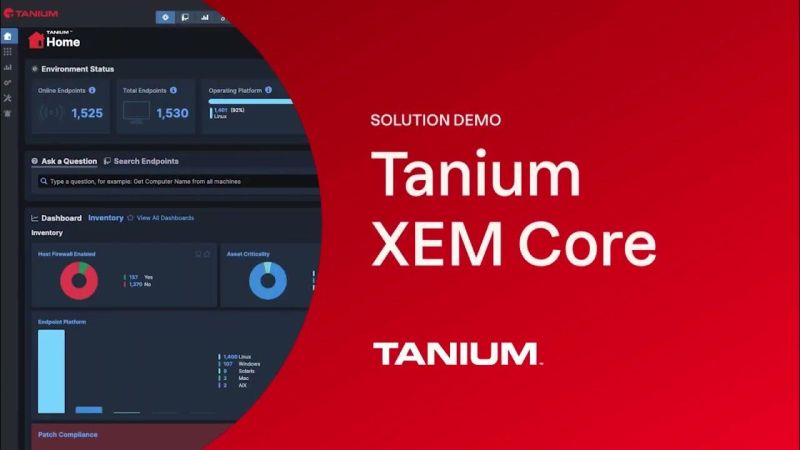
Tanium XEM (Converged Endpoint Management) rejects standard database-driven architectures in favor of its proprietary "Linear Chain" architecture. Ajanlar do not receive queries directly from a central database; instead, agents form a local network ring to forward query instructions to each other.
"Tanium Performance" tracks and logs CPU, RAM, disk, and network stats on endpoints, allowing admins to look back and see "which processes degraded performance yesterday." "Tanium Patch" and "Tanium Asset" allow operators to query asset inventory and push updates to millions of endpoints in under 15 seconds. Patch files are distributed using P2P (peer-to-peer) protocols, preventing WAN choke.
- Pros: Unmatched real-time query speeds (responses in seconds across huge fleets), P2P patching that saves up to 98% of WAN bandwidth, and detailed system performance troubleshooting histories.
- Cons: Extremely high cost of entry, and an infrastructure complexity that is excessive for small and medium-sized businesses.
https://www.tanium.com/products/tanium-performance/
Sophos Intercept X
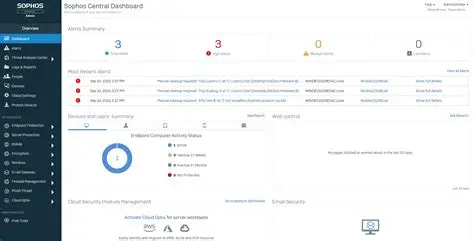
Sophos Intercept X is designed with a "Synchronized Security" philosophy, allowing the endpoint agent and network firewall to communicate directly. The agent shares health telemetry with Sophos Firewalls over a dedicated channel called "Security Heartbeat."
If a threat is detected on an endpoint (changing its health status to Red), the firewall instantly blocks its access to other VLANs or the internet. Additionally, "Synchronized Application Control" enables the firewall to query the endpoint agent to identify the exact name and path of unknown encrypted applications producing network traffic.
- Pros: Autonomous, bi-directional isolation chain between firewalls and endpoints, and source-level classification of unknown network traffic.
- Cons: Its most innovative integrations require full investment in the Sophos hardware ecosystem (Sophos Firewall).
https://www.sophos.com/en-us/products/intercept-x
Fortinet FortiEDR
Fortinet FortiEDR integrates into the network security giant's "Security Fabric" ecosystem, utilizing patented post-infection protection technology.
Even if malware executes on an endpoint and attempts encryption, FortiEDR blocks the action (file modifications or network output) at the kernel level. Via the "FortiTelemetry" protocol, it feeds real-time SaaS application performance statistics (latency, packet loss, jitter) back to Network Operations Center (NOC) teams running FortiGate SD-WAN policies.
- Pros: Kernel-level post-infection containment that stops running ransomware in its tracks, and native integration into the Fortinet Fabric ecosystem.
- Cons: Management dashboard interface is less intuitive than some pure-play EDR solutions, and performance correlation is limited outside Fortinet networks.
https://www.fortinet.com/products/endpoint-security/fortiedr
Convergence of NOC and SOC (Unified IT Operations)
Having separate cybersecurity (SOC) and infrastructure (NOC) teams using distinct tools, data sources, and jargon leads to operational blind spots and increases the Mean Time to Resolution (MTTR) during outages.
Modern XDR and XEM (Converged Endpoint Management) agents leverage kernel-level access to take over or assist tasks historically managed by traditional RMM (Remote Monitoring) and NMS (Network Monitoring) systems:
- Agent Consolidation (Single Agent Strategy): Installing separate agents for performance monitoring, patching, and antivirus leads to "Agent Fatigue" and resource waste. Modern agents (e.g., SentinelOne, CrowdStrike, Tanium) collect both security telemetry and IT operations metrics over a single lightweight service.
- Autonomous Asset Discovery: Modules like SentinelOne Ranger or Tanium Discover turn active agents into subnet scanners. They map all unmanaged devices (Shadow IT) on the network without creating network overhead and can isolate rogues automatically using agent firewalls.
- Performance & Digital Employee Experience (DEX): Platforms like Tanium Performance or CrowdStrike Falcon for IT (osquery-based) record resource usage histories at second-level resolution. If a user complains of slowness, admins can look back to see "exactly which process spiked CPU yesterday," reducing troubleshooting times.
- Remote Orchestration and Scripting (RSO & RTR): SentinelOne Remote Script Orchestration (RSO) or CrowdStrike Real Time Response (RTR) enable administrators to run PowerShell/Bash scripts with SYSTEM privileges across thousands of devices in seconds. Linked to SOAR engines, they can create self-healing routines (e.g., automatically running disk cleanup when a drive exceeds 90% capacity).