The Adventure of Operating Systems
In this article, we will examine the operating systems that have become indispensable for computer systems today. We will talk about how it developed and how it came to these days. We will witness how the operating systems popular today emerged.
To start with what the operating system is; Operating system is software that controls all operations of a computer. This software provides the tools that allow a user to save and open files, the interface through which a user can convey a request to execute a program, and the environment in which the desired programs can be executed. When it comes to operating system, Windows operating system developed by Microsoft comes to mind. Apart from this, there are also Unix and Linux operating systems. But before that, let's look at the history of operating systems.
First computers
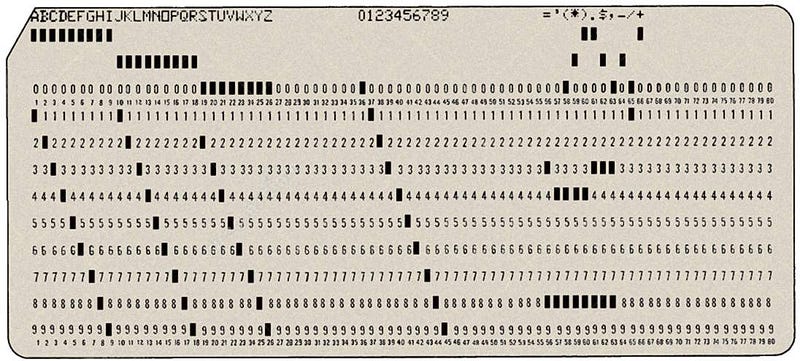
The first computers were the size of a room. They did not have an operating system. Programs were coded on punched cards and were given to the computer and executed sequentially. This process, called the mission, required serious preparation. To run a program on the computer, a reservation was made in advance and that user would have the right to use the computer during this period.
In such an environment, operating systems emerged as systems that simplify program installation and organize transitions between tasks. The user who wanted to execute a task would give the program, the data to be processed, and the instructions to the operator, the task would be queued, and the operator would execute the program in accordance with the instructions. Then the user would come to get the results. This is the first example of the concept of batch processing. Although this system increased the efficiency and operating speed of computers, it also prevented the user from interacting with the computer. It was unacceptable for applications that required the user to interact with the program during its execution.
To meet these needs, an interactive processing model was developed, enabling users to establish a dialogue with the executing program via a terminal. These terminal screens continue to exist in today's operating systems. However, this model brought with it new problems. That is, only one user could run a program with the terminal at a time. In those days when computers were very expensive systems, a single computer had to serve multiple users.
The solution to this problem was to develop an operating system that could serve multiple users at the same time. This led to the emergence of time-sharing systems. In this technique, time was divided into certain intervals and the execution of each task was limited to a single time interval. At the end of each interval, the current task would be stopped, temporarily stored, and another task would be executed. Processing and removing multiple tasks quickly would create the impression that these tasks were being executed simultaneously. Additionally, this system enabled a user to run multiple programs at the same time.
In short, operating systems have evolved over time from simple programs that can carry out a single task at a time to complex systems that manage time sharing, are responsible for programs and data files in storage, and can respond to users' requests.
The birth of Unix

In the 1960s, AT&T's Bell laboratories, MIT and General Electric worked on a time-sharing operating system in a project carried out together. As a result of this project, an operating system called "Multics" emerged. When Bell Laboratory withdrew from the project, Dennis Ritchie and Ken Thompson, who worked there, created a new operating system in a new project, taking advantage of their experience in the "Multics" project. This operating system, which was initially written in assembly language, was called "Unix".
Dennis Ritchie rewrote Unix with the C programming language he developed in 1973. While the operating system, which was previously written in assembly language, was dependent on the architecture of the hardware on which it ran, he gained the ability to run on different platforms with the C language. After this stage, the Unix operating system began to be heard and rapidly gained popularity with the support of students and employees in the computer departments of universities.It made progress and became the most important operating system.
The Unix operating system was a complete operating system that included command line and some graphical elements like Windows. Users carried out their operations using command lines. Thanks to being a time-sharing operating system, multiple users could use the computer or a user could run multiple programs simultaneously.
In the early 1980s, AT&T sought to monetize the UNIX operating system and began marketing the operating system with special licenses. Many people who helped develop the operating system from the day UNIX emerged opposed this decision. Thereupon, the GNU project, whose aim was to create a UNIX-like operating system that could be distributed free of charge, was started by Richard Stallman and the "Free Software Foundation (FSF â€" Free Software Foundation)" was established for this project.
The birth of Linux
Within the scope of the GNU project, the Minix operating system, a Unix derivative, emerged. This operating system was developed by Prof. It was developed by Andrew S. Tanenbaum with a microkernel architecture in order to teach students in university computer departments the working principles and functions of operating systems.
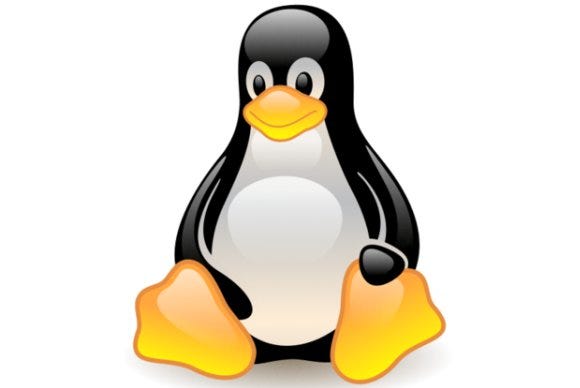
In 1991, computer science student Linus Torwalds posted a message to a newsgroup where information was exchanged on Unix and Minix operating systems. In his message, Linus stated that he was working on a free operating system and asked for suggestions for development. Linus named his new operating system Linux, which he described as Linus' Minix. Offers of help for the development of Linux began to come from developers. Another important aspect of Linux was that a large part of the Unix-like operating system developed within the framework of the GNU project was finished. What was missing was the kernel of the operating system, and Linux made up for this deficiency. In September 1991, the first version of Linux was released and thus Linux was born.
The birth of Windows
Personal computers were still in the early stages of their development in the mid-70s. MITS' most important sample, called Altair, did not yet have a uniform, usable software, but had an incomplete operating system. Thanks to BASIC, the software language developed by Bill Gates and Allen for Altair in 1974, computer users could write their own programs. MITS company purchased the marketing license from young researchers and ordered them to further develop the system. Thereupon, Gates founded the company called Microsoft in New Mexico with Allen.
Microsoft developed an operating system called MS-DOS for IBM PC compatible computers. In 1980, it formed a partnership with IBM, and with this agreement, IBM paid Microsoft a licensing fee for each sale. He then developed a new graphical user interface (GUI) for MS-DOS called "Interface Manager." However, before the official launch in 1985, marketing experts convinced Bill Gates that Windows was a more appropriate name. Thus, Windows was born as an interface program that facilitates the use of personal computers. Windows, which is an interface software built on top of the MS-DOS operating system, became a complete operating system with the release of new versions in the following years.
Today's Operating Systems

In the computer world, Windows, Unix and Linux operating systems have become generally accepted and have evolved over time and come to this day with different versions. Today's operating systems are based on one of the Windows, Unix or Lnux operating systems. They are derived from these 3 operating systems. In this respect, we can divide operating systems into 3 classes.
1- Unix Based operating systems
 2 -Windows based operating systems
 3- Linux based operating systems
Unix-based systems
One of the most important reasons why Unix became popular after its emergence is that it allows different initiatives. Unix is ​​a copyrighted commercial product. The Open Group manages all Unix-related commercial licensing programs. Only some large companies with licenses can use the UNIX trademark and name. In this way, Unix-based operating systemsWe can talk about the existence of n. Some Unix distributions are as follows;
MacOS, Oracle Solaris, IBM AIX, HP-UX, IRIX and BSD.
Windows-based systems
Windows uses useful graphical interfaces and visual messages to run programs, issue commands, etc. It provides ease of performing fast transactions. The most important feature of Windows operating systems is that they are easy to learn. Thanks to this convenience, it has become the most used operating system. Many versions of Windows have been released so far. These are respectively;
They are Windows 1.0, Windows 2.0, Windows 3.0, Windows 95, Windows 98, Windows ME, Windows XP, Windows Vista, Windows 7, Windows 8, Windows 8.1 and Windows 10.
Linux-based systems
After its emergence, Linux attracted worldwide attention and was adopted by GNU. That's why the concept of GNU/LINUX emerged. Linux is supported by GNU today. In fact, Linux consists only of the kernel and does not have an interface. Since it is open source, free software, it is free and can be customized as desired and different Linux distributions can be created. Therefore, there are countless Linux-based operating systems.
In order for a Linux-based system to exist, a structure that can be called a skeletal system is required after the kernel. Some systems develop their own systems here. However, developing separate interfaces (GUIs), package managers and applications for each Linux distribution is very costly. For this reason, some people create the operating system by taking the existing system and making additions to it. In the interface; Ready interfaces such as GNOME, XFCE, MATE, CÄ°NAMON are used. Examples of package managers are APT, DNF and PACMAN. Numerous Linux distributions have sprung up using different package managers and GUIs. Some of these are;
Ubuntu, Kali Linux, Pardus, Linux Mint, Zorin, Deepin, SteamOS, MX Linux, PureOS, Raspbian, Parrot, elementaryOS, Pop!_OS, Linux Lite, Fedora, Redhat, Opensuse, CentOS and Arch Linux.
Originally published at https://pwnlab.me on June 1, 2021.